Why Some Vowels Make High Notes Easier
How small vowel changes can unlock your upper range.
3/24/20263 min read


Some Vowels Just Work Better In Your High Range
If you’ve ever noticed that certain words feel easier to sing on high notes than others, you’re not imagining it. Some vowels naturally align better with acoustic resonance at higher pitches, making those notes feel freer and more stable.
This has to do with how vowel shapes interact with the space inside your vocal tract. When a vowel matches the pitch you’re singing, the sound amplifies more efficiently. When it doesn’t, singers often compensate by pushing or straining. Also, some mouth shapes encourage relaxation, while others invite in tension.
Understanding how vowels work can make high notes feel significantly easier without adding effort.
How Vowel Shape Changes Space and Airflow
Every vowel you sing changes the shape of your vocal tract, including your mouth, tongue position, and soft palate. These subtle adjustments affect how sound waves resonate and how easily air flows through the system.
For example:
Wide vowels like “ae” or “eh” create more open space but can become harder to manage at higher pitches.
Narrower vowels like “oo” or “uh” naturally streamline airflow and often feel easier in the upper range.
As pitch rises, the space inside the vocal tract needs to adjust to stay in alignment with the frequency of the note. If the vowel stays too wide or rigid, the voice may feel strained.
When the shape adapts appropriately, airflow becomes smoother, and the sound feels more connected rather than forced.
The video below discusses the vowel sounds and how subtle vowel modification can make a huge difference.
How Small Vowel Modifications Reduce Strain
One of the most powerful tools singers use is vowel modification. Singers can make subtle adjustments to a vowel as pitch increases.
This doesn’t mean completely changing the word to the point that we cannot recognize it. Rather, singers can slightly shift the shape of the vocal tract to find the best natural resonance. These adjustments help the vocal tract stay relaxed and compatible with higher frequencies, which reduces the need to push for the note. This help with:
Less tension in the throat
More stable pitch
Easier access to high notes
A smoother, more consistent tone
For some practical application, sing along with the video below, experiment with your vowles, and see how these subtle changes feel in your body.


Drills That Train Flexible Vowel Shaping
Like any vocal skill, learning to adjust vowels takes practice. The goal is to develop flexibility so your voice can naturally adapt as you move through your range.
Here are a few effective approaches:
1. Single-Vowel Scales
Start with one vowel (like “ah”) and sing simple ascending scales. As you go higher, allow the vowel to adjust slightly without forcing it to stay fixed.
2. Vowel Transition Exercises
Practice moving between vowels (such as “ah–uh” or “eh–ih”) on scales. This builds awareness of how small changes affect ease and tone.
3. Light, Connected Slides
Use gentle slides (sirens) while focusing on keeping the sound smooth and consistent. Let the vowel naturally shift as the pitch rises instead of locking it in place.
These exercises help train your voice to stay flexible rather than rigid, which is essential for comfortable high notes.
Smarter Vowel Choices Lead to Easier High Notes
High notes don’t have to feel like a battle. We want to focus on technique and alignment rather than push.
When vowel shapes adjust to match higher pitches, the voice can resonate more efficiently, reducing strain and improving tone. Instead of forcing the sound, singers can allow the voice to work with, rather than against, their own instruments.
In the end, smarter vowel choices make high notes feel easier, more stable, and more natural, turning something that once felt difficult into something far more manageable.
Just For Fun
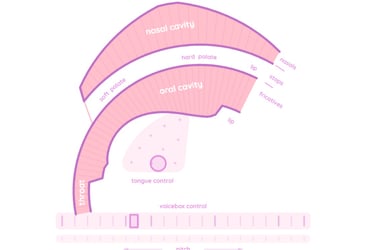
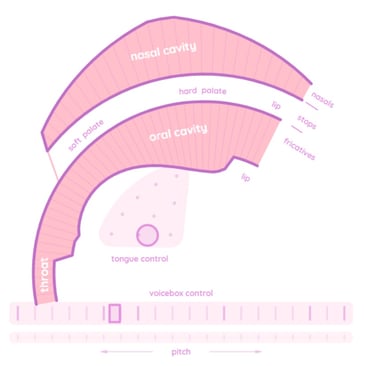
Try out the vocal tract simulator below
*PC or Mac required*