The Psychology of High Notes
Why fear can affect your voice, even before your first note.
5/12/20262 min read


Fear Shapes Your Tone Before You Sing
Many singers have experienced it: a high note approaches, and suddenly your voice feels different…tighter, less steady, or harder to place. Anticipatory anxiety is already influencing your voice before the note even arrives.
Understanding how fear interacts with the nervous system and vocal mechanism is the first step to transforming high-note challenges into confident, controlled singing.
Anticipatory Tension Impacts Breath and Laryngeal Stability
When the body senses a challenge, it instinctively activates protective responses. For singers, this often manifests as:
Shortened, shallow breath
Raised or stiffened larynx
Increased neck, jaw, or tongue tension
These changes reduce the efficiency of airflow and make pitch control less reliable. Even if your technique is solid, the body’s automatic reaction can create audible strain, making the high note feel more difficult than it truly is.
Recognizing that this tension is anticipatory helps you approach the note more objectively and reduces the pressure to “push through.”

How To Fix It:
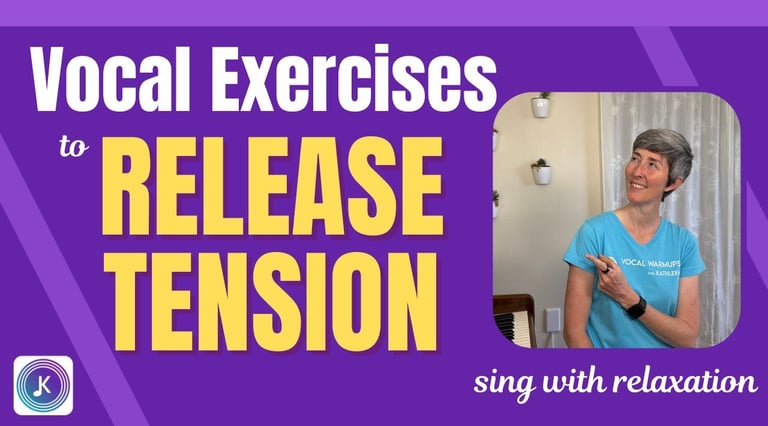
Add a tension release playlist, like the one below, to your regular warmup routine.
Why It Happens:
This video explores some of the anatomy, physiology, and psychology of singing high notes.
Controlled Airflow Reduces Anxiety-Driven Strain
One of the most effective tools for managing fear in high notes is steady, controlled airflow. When the breath is consistent, the vocal folds can vibrate freely, and the larynx remains stable.
Techniques to reinforce airflow include:
H-onset exercises – initiating sound gently while maintaining air pressure
Lip trills or gentle sirens – engaging airflow without force
Breath-focused warmups – feeling air move steadily through the vocal folds
You'll find many of these types of exercises in the tension release playlist above.
Gradual Ascents Retrain Confidence Neurologically
Confidence on high notes is partially neurological. The brain learns patterns through repetition, and gradual exposure can retrain the nervous system to approach high pitches calmly.
Practical approaches include:
Stepwise scale ascents – moving slowly up in pitch so each note feels achievable
Short sequences with controlled dynamics – building familiarity without strain
Mindful attention to sensation – noting how breath and larynx behave in real time
Over time, the brain associates high notes with safety rather than threat, reducing automatic tension and allowing the voice to perform more freely.
Reminder:
Sometimes we know exactly what to do but we get in our own way...

High Notes Respond When the Nervous System Feels Safe
Singing high notes is a matter of how the body perceives safety and control. Fear and anticipation can alter airflow and vocal fold coordination before you even begin.
By practicing controlled breath, gentle onset, and gradual pitch exposure, singers can retrain their nervous system. When the body feels secure, high notes become easier, more reliable, and more expressive, turning anxiety into confidence.