Mastering Performance Skills
Why memorable performances involve more than singing the right notes.
6/9/20262 min read

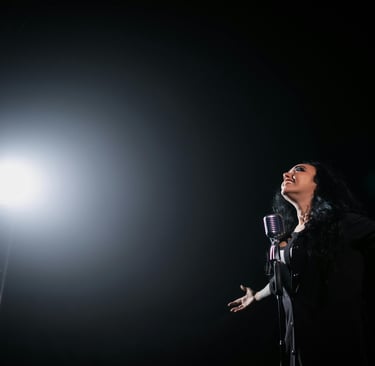
Great Performances Go Beyond Accuracy
Most singers spend a large amount of time working on pitch, rhythm, diction, and memorization. Those elements matter, but strong performances depend on more than technical accuracy alone. Audiences respond to connection, communication, and presence just as much as musical precision.
Performance skills combine several elements at once: stage presence, ensemble awareness, emotional communication, and technical consistency under pressure. Like any musical ability, these skills improve through focused repetition and experience.
Looking for a Performance Day Warmup?
Save these pre-performance exercise playlists to your favorites. Then read on!


Stage Presence, Confidence, and Grounding
Many singers assume stage presence is something performers either naturally have or don’t. In reality, it’s largely built through familiarity and preparation.
Confidence on stage often comes from feeling physically grounded and mentally focused before the performance even begins.
Helpful strategies include:
Maintaining balanced posture and relaxed movement
Taking slower breaths before entrances
Using visualization before performances or auditions
Mentally rehearsing successful performances rather than potential mistakes
Visualization can be especially useful because the brain responds strongly to repeated mental rehearsal. When singers consistently imagine calm, successful performances, the stage environment gradually begins to feel more familiar and manageable.
Strong stage presence rarely comes from trying to “look confident.” It usually develops when singers are fully engaged in communicating the music.

Ensemble Awareness and Listening Skills
For choral singers especially, performance depends heavily on listening.
An ensemble becomes more unified when singers actively adjust to one another in real time. This includes:
Matching vowels and consonants
Blending tone quality
Coordinating dynamics
Shaping phrases together
Good ensemble singers constantly balance their own sound against the group. Sometimes that means projecting more clearly. Other times it means pulling back to support overall blend.
Listening also improves intonation and timing. When singers stay aware of surrounding parts, entrances feel cleaner and harmonies lock together more naturally.

Combining Technique With Performance Skills
One of the biggest challenges in performance is maintaining healthy technique while also communicating emotionally.
This is where consistent warmups and technical training become valuable. Reliable breath coordination, balanced airflow, and efficient resonance allow singers to focus more attention on musical expression during performance.
As technique becomes more automatic, performers gain greater freedom to engage with the audience, connect with the ensemble, and respond musically in the moment.
Performance skills and technical skills support one another rather than existing separately.
Performance Mastery Develops Over Time
Strong performers are rarely created overnight. Stage presence, ensemble awareness, emotional communication, and confidence all improve gradually through repetition and experience.
Every rehearsal, performance, and practice session helps build those skills. Over time, singers become more comfortable balancing technique with communication. That’s often what transforms a technically accurate performance into a compelling one.